
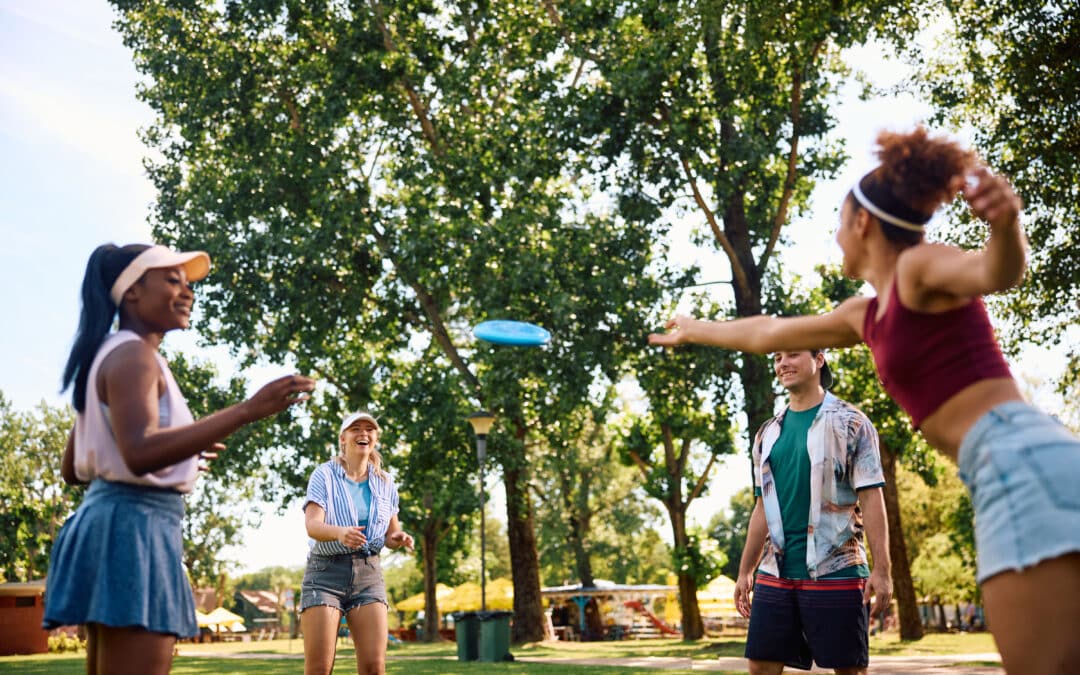
Disc golf has grown rapidly over the past two decades, from a small hobby into one of the fastest-growing outdoor sports with over 15,000 courses globally.
The sport is accessible and low-cost, appealing to players of all ages. An excellent addition to parks, schools, or recreation facilities.
What Is Disc Golf?
Disc golf is a flying disc sport played much like traditional golf. Instead of hitting a ball with clubs toward a hole, players throw a disc toward a metal basket target. The objective is to complete each hole in the fewest throws possible. A disc golf course consists of 9 or 18 holes.
Each hole includes a tee area where players make their first throw, a fairway that leads toward the target, and a basket target that completes the hole. Players start at the tee and continue throwing from where their disc lands until they reach the basket and land the disc.
Why Disc Golf Is So Popular
Several factors have contributed to the sport’s rapid growth. Firstly, it’s accessible as it requires minimal equipment and is an easy sport to get into as a beginner. Additionally, it’s a low-cost sport as many courses are located in public parks and are free to play. It’s inclusive for people of all ages and skill levels to enjoy the game. Lastly, disc golf encourages time outdoors and walking. Because of these benefits, cities, schools, and private landowners are increasingly interested in installing their own courses.
How to Set Up a Disc Golf Course
Designing and installing a disc golf course requires careful planning. The goal is to create a layout that is fun, challenging, safe and sustainable for long-term use. Here are the key steps involved in how to set up a disc golf course.
1. Choose the Right Location
The first step is selecting land that works well for disc golf. Ideal areas often include public parks, schools, recreational facilities and private land. A full 18-hole course requires 20 to 40 acres, although smaller 9-hole courses can fit into tighter spaces.
Ideally, you want to set up on good terrain with natural obstacles like trees and hills, open fairways with safe throwing lanes, and areas away from roads, playgrounds, and walking paths. Safety should always be the top priority during planning.
2. Design the Course Layout
Course design determines how enjoyable and playable the course will be. When designing a course, you should focus on variety, ideally including both long and short holes.
Shot diversity is an easy way to make it interesting, mix left, right, and straight fairways. Other ways to mix it up can be allowing challenges for beginners and experienced players, or integrating the course with existing landscapes. Professional course designers often use mapping software or walk the property to visualise fairways and hole placements.
A course typically includes par 3, 4, and sometimes par 5 holes, distances ranging from 200 to 600 feet, and strategic obstacles like trees or elevation changes.
3. Install Tee Areas
Tee areas are where every hole begins. A stable tee surface is important for both safety and consistent throws. Common tee options include concrete pads, paver stones, artificial turf, or reinforced grass areas.
Many course operators use artificial turf tee surfaces because they provide consistent traction, require minimal upkeep, and withstand heavy foot traffic. Some facilities install specialised disc golf tee pads and turf systems to create reliable throwing surfaces. They hold up well in all weather conditions, ensuring long-lasting playability and reduced maintenance.
4. Install Disc Golf Baskets
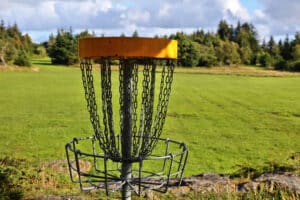
The basket is the target that players aim for. Baskets should consist of a central pole, hanging chains, and a catching basket at the bottom. The chains slow the disc and drop it into the basket when the throw is accurate. For public or tournament-level courses, PDGA-approved baskets are recommended to maintain consistent play standards.
5. Add Course Signage
Signage helps players to navigate the course and understand each hole. This can be tee signs showing hole distance and layout, directional signs guiding players to the next hole, and course maps at the entrance. Good signage improves the player experience and prevents confusion, especially for first-time visitors.
6. Plan Player Flow and Safety
Proper course flow ensures that players move smoothly from hole to hole without crossing over active fairways. Important safety considerations include clear sight-lines, avoiding throws across paths or roads, adequate spacing between holes, and defined walking routes between baskets and tees. A well-planned layout prevents accidents and reduces frustration during play.
Disc Golf Course Maintenance
Once a course is installed, ongoing care is essential. Good disc golf course maintenance ensures that the course stays safe, attractive, and enjoyable for players.
1. Tee Pad Upkeep
Tee pads experience constant foot traffic and must remain stable and safe. They should be cleaned regularly, removing debris or mud and checked for wear or loose surfaces.
The tee pads should also be checked for proper drainage. Artificial turf tee pads often require less maintenance than natural grass areas because they resist erosion and remain playable in wet conditions.
2. Fairway Maintenance
Fairways should remain clear enough for playable throws while preserving the natural landscape. Grass should be regularly mowed and vegetation trimmed. Remove fallen branches and manage any overgrowth. Ensure to maintain defined throwing lanes. Park crews or volunteers often assist with these tasks.
3. Basket and Equipment Inspections
Targets and course equipment should be inspected regularly to ensure safety. Routine checks include tightening loose basket hardware, repairing damaged chains and ensuring baskets remain level and secure. Damaged equipment can impact gameplay and create safety risks.
4. Erosion and Drainage Control
Disc golf courses often experience heavy foot traffic, especially near tees and baskets. Without proper management, this can lead to soil erosion, muddy pathways, or worn turf. To prevent this from happening, install turf mats or reinforced surfaces, add gravel or stepping stones to walkways, and improve drainage around high-traffic areas. Preventing erosion helps protect the landscape and extend the life of the course.
5. Litter and Environmental Care
Keeping the course clean encourages repeat visitors and protects the environment. It can be useful to install rubbish bins or organise community cleanup events. Many disc golf communities take pride in maintaining their local courses through volunteer efforts.
The Growing Future of Disc Golf
Disc golf continues to expand worldwide as more communities recognise its value as a sport. New courses are being installed in parks and schools every year. The sport’s growth is driven by low costs compared to traditional golf, minimal environmental impact, strong community involvement, and year-round playability. With proper planning, installation, and maintenance, a disc golf course can serve players for decades.
Building and Maintaining a Successful Disc Golf Course
Understanding what disc golf is, how to set up a disc golf course, and the importance of disc golf course maintenance is essential for anyone considering installing a course. A well-designed course is accessible to the community and a fun and challenging outdoor activity. By planning layouts carefully and maintaining the course by utilizing grass mats to prevent damage, organisations can create a place that players will enjoy for years.